I was fortunate enough to have been selected to deliver one of four Workday Talks for VIBE Week in the Workday Dublin office this week.
VIBE is a Diversity and Inclusion global event (25 sites) to celebrate all our differences, to highlight tangible actions towards a culture of diversity and inclusion and to remind us to Value Inclusion, Belonging and Equity for all.
I choose to speak about listening, I mean really listening. To be able to bring your whole self to work you need to feel safe. And to feel safe you have to have trust. One of the best ways to build trust with the people is to listen, and I mean really listen. I wanted to share three simple lessons from my time working closely with people (simple in concept – mastery of the technique is a little trickier) :
- Show Up
- Listen with your Eyes and Heart
- Ask Good Questions
See the slide and speaker notes below.
Opening …
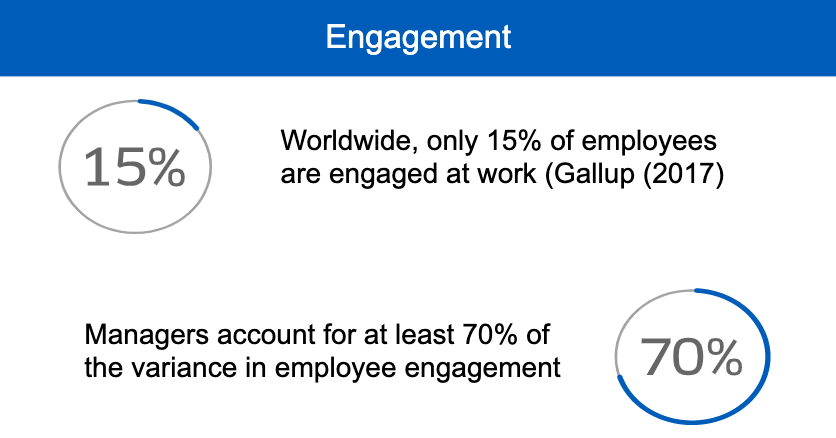
Gallup, the polling and research company, have interviewed over 27 million workers in 144 countries over the last 2 decades … and the results are astonishing!
15% of employees worldwide are engaged at work ( 31% North America, but as low as 10% in Western Europe!). Workday would be in the top quartile, but there is always room for improvement – and you may not always work for a great company like this – shameless plug ;-). 70% of the variance is due to the manager. However, we all play a leadership role in some part of our job, so I think there is a lesson there for us all to learn.
Employees who bring their whole self to work, are more engaged. Engaged employees are more productive and more creative. Who wouldn’t want that? But …
- being … afraid to speak up and ask a question
- being … worried that people might judge you
- being … someone you are not, pretending …
… is not bringing your Whole Self to Work
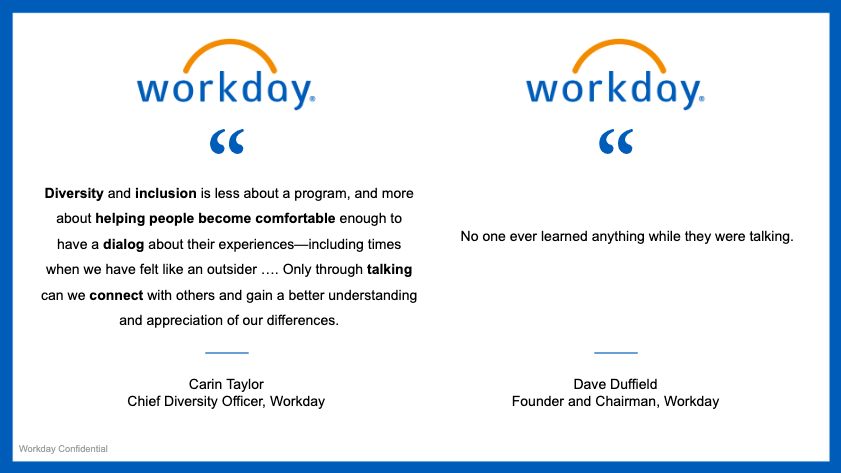
To bring your Whole Self,
your authentic and imperfect self,
you must feel Safe.
To feel safe you have to have Trust.
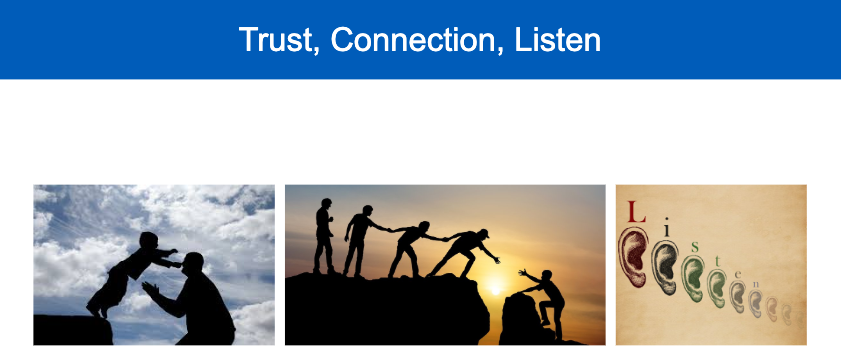
- If you want to build Trust …
- If you want to make a Connection … …
- Just Listen
What is Listening?
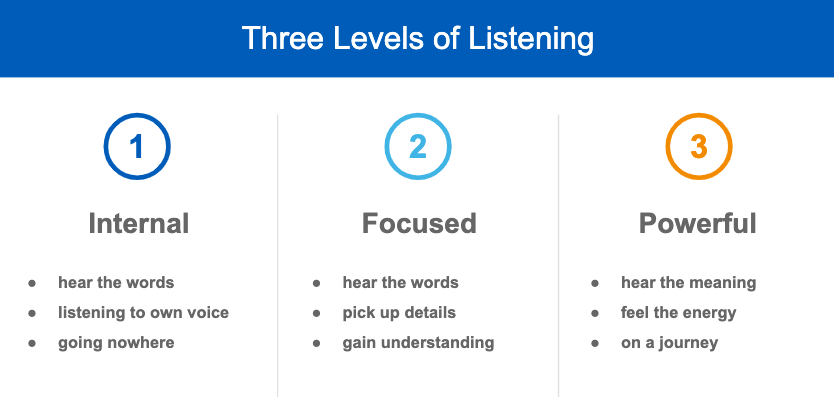
- Internal
- Only hear the voice inside your head
- Focused
- Good eye contact
- Can recall every detail
- Pick up on feelings
- Powerful
- Listening + Observing
- Validating + Questioning
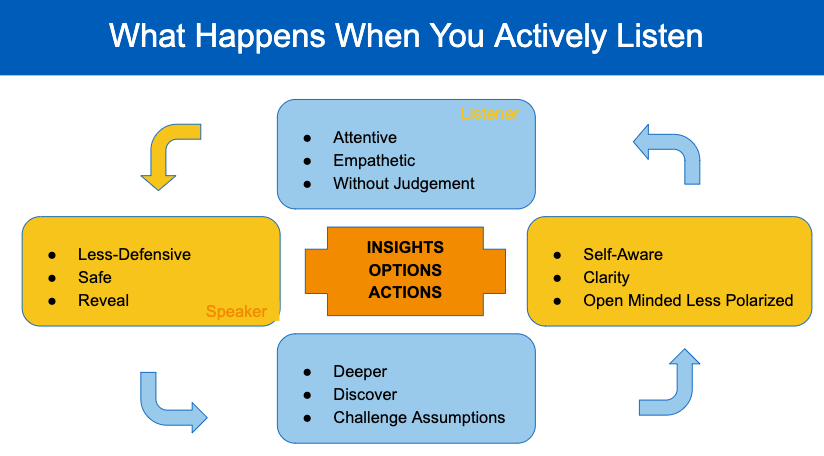
When you really listen, show understanding, and don’t judge, people begin to open up and reveal what they really feel. As you discover more you can probe deeper and deeper. With new knowledge, people become more self-aware and tend to see both sides of an argument.
It’s a continuous loop until you reach a point where the collaboration exposes real insights that enables the person to have a greater perception of choice, and with that, formulate concrete action to take.
Lesson 1 – Show Up
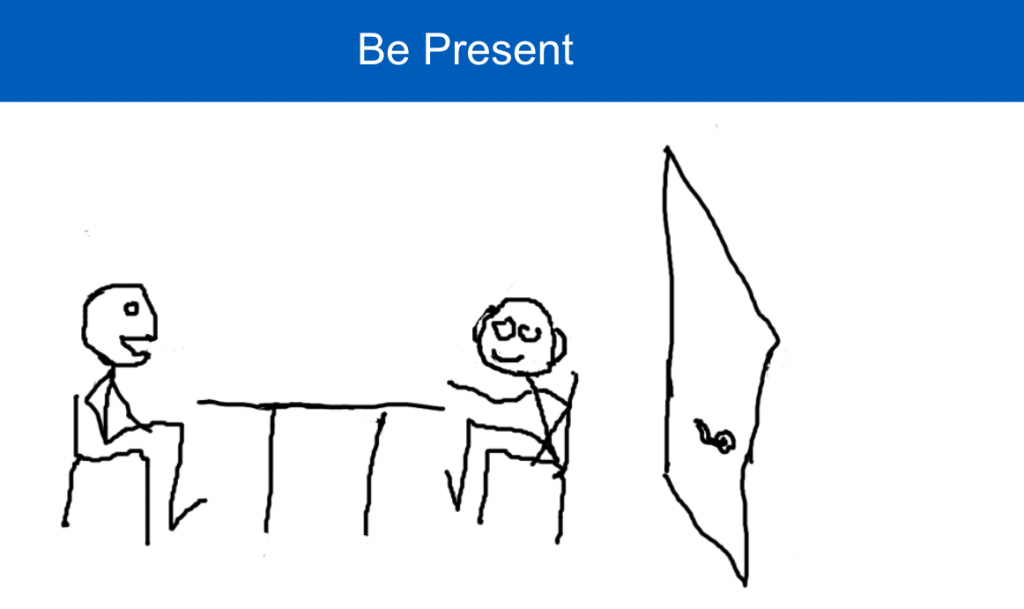
This is me talking ….
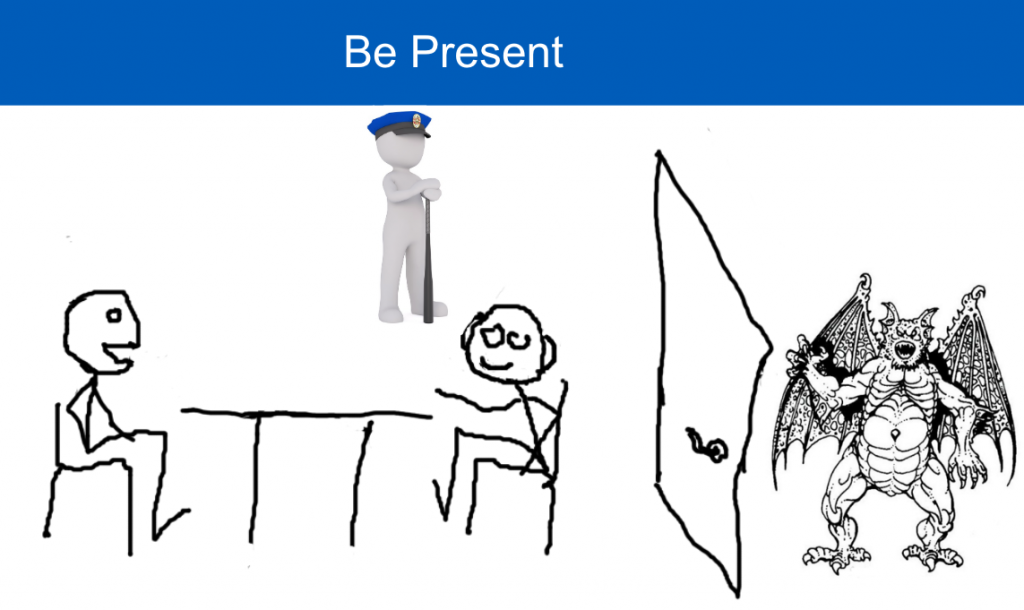
…. but this is me really listening.
Have you ever been sitting at your desk and you see somebody walking towards you – and you go, oh, not this guy! You fill with dread, you start planning your counter arguments. You need to leave all your biases, prejudices and preconceptions outside the door.
Show Up : Before Starting Lose the Demons
- Real Be Authentic / Genuine, don’t put up a Facade
- if you are in any way insincere – you will show it – and the other person will pick up on it.
- They are not going to trust you.
- Empathetic Really want to try to understand the Other Person’s Experience
- even if you are not naturally empathetic, wanting and digging to understand the other person will get you there – I used to be Keyboard, Headphones On, No Customers to talk to – that was my ideal day at work 🙂 But you can learn.
- Value You really have to value the other person for who they are and what they want to achieve.
- This is the big one. It enables me to truly enjoy all interactions, even the tough ones.
- Allow yourself the opportunity to put aside any bias, prejudices, or preconceptions
- I feel it is almost like the transformative power of forgiveness …
- You will be amazed at how you will unburden yourself, and find it far far easier
- to fully commit in heart and mind to the other person
- Unconditional Positive Regard – catch yourself not having UPR
Show Up : The Listening Cop – Guarding Against the Voices in you Head
- Monitor yourself that you are staying attentive and asking the right questions
- another voice making sure there are no other voices 😉
- some people have described the ‘monitoring’ as an out body of body experience – it can feel like that when you are in the zone, super focused and you lapse.
- Suspend Judgement or Evaluations
- your unconditional Acceptance of the other person will help them with their Self-Acceptance
- how can you feel safe to reveal your deepest feelings if you are feeling judged
- Voices in you head [Level 1 Internal Listening]
- your unconscious will be trying to pop thoughts into your heads, don’t get distracted, stay focused.
- It’s not about YOU … you think you had a bad day? well let me tell you about my …
- when you start talking about yourself – three bad things – you’re talking, not listening, and not learning
- note, sometimes you do have to slip into ‘mentor’ mode – and that is talking about you.
Show Up : Have the Courage to Give Up Control
- Don’t try to Influence or Direct the Conversation
- Don’t be afraid of not having all the answers
- Be Confident – Be Vulnerable
- Feedback
- When you don’t control the agenda and you are digging, the ‘problem’ might be you, or something you did or are not doing – that’s effectively feedback …
- … and it’s coming from someone probably not trained/skilled in giving feedback …
- so it could be pretty raw … threatening – but that’s ok, keep digging and don’t judge …
- Threat to your Self-View – understand that it’s natural to get defensive, disregard what was said, and dismiss the other person – it’s how we protect ourselves.
- as noted above, 70% of the variance in engagement is the manager interactions – so intentionally or unintentionally or indirectly, you, or your actions, are going to become the subject of the conversation.
- understand that it’s natural to be defensive about a threat to our self-view – use the Listening Cop to alert you if you become defensive, start judging and stop listening.
- Be Confident to Be Vulnerable
- If you are really trying to listen, that’s a sign you are already good, have that self-belief.
- You have to understand their feelings, not necessarily agree.
- remember your ‘Level 5’ leadership (Jim Collins) – humble – learning – purpose, it’s not about you.
- Feedback
Lesson 2 – Listen With Your Eyes and Heart
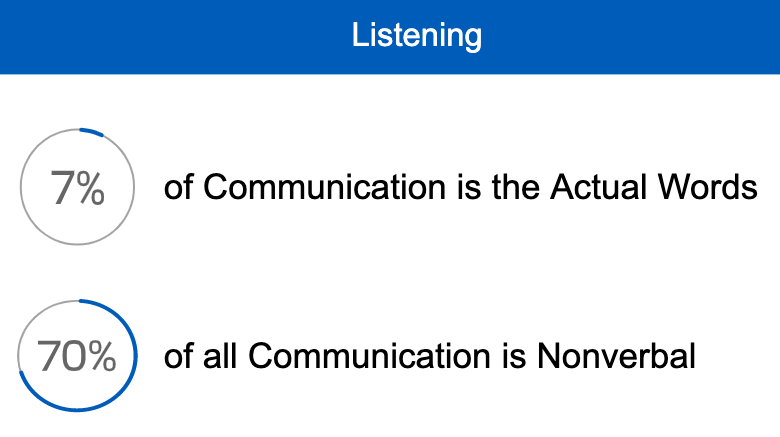
- Only 7% of Communication is the actual words
- 70% of all Communication is Non-Verbal
The specific results of the research depends on the context, but universally, there’s far more spoken nonverbally.
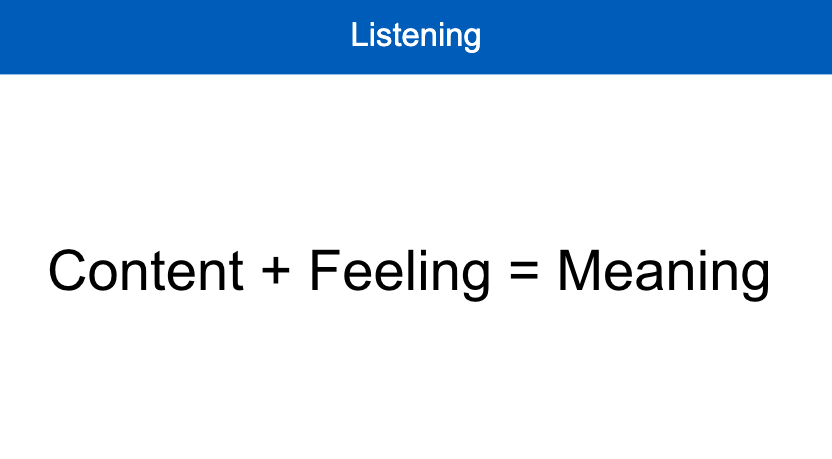
To truly understand the Meaning of what is being said you have got to understand the feelings behind it.
- DO Test for Understanding
- Reflect both the meaning and feeling
- You need to be able to identify and recognize the emotion or feeling
- Because, if you don’t – your Action is unlikely to succeed
- For example, if you are detecting Sadness or Worry – one may just require cheering up, while the other requires Comfort and/or Reassurance – only digging to discover sadness and choosing to cheer up someone who is in fact worried, will be just temporary and the wrong course of action.
- Having a good emotional vocabulary is essential. There are far more negative emotions or feelings than positive ones, so being able to identify which exact one is at play is critical.
- Reflect both the meaning and feeling
- DO Note the (nonverbal) Queues
- Body Language
- Tone
- Hyperbole — when people are emotional, they tend to distort
- Embellishments — when some really wants to send you a message, they often add adjectives or adverbs to emphasize a point. When you spot these, they are invitations to you to dig deeper.
- Adjectives Embellish Nouns
- Adverbs Embellish Verbs [for example : .. really concerned, super interested ..]
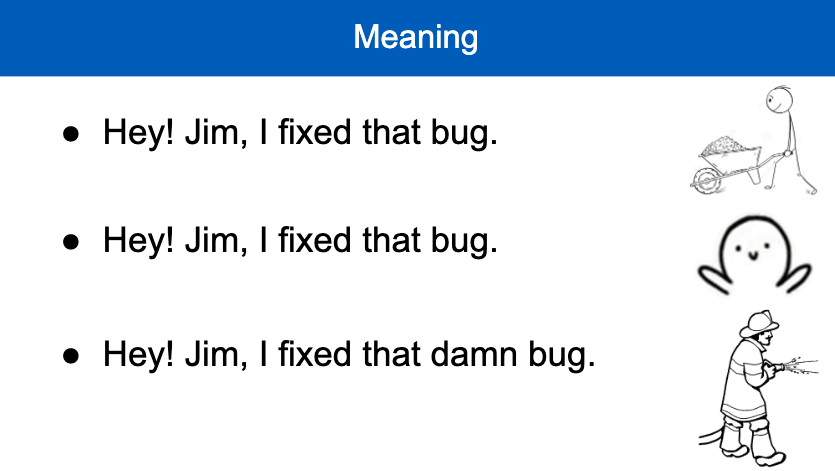
For example, 3 people can come to you and say the exact, or almost exact same thing and have 3 completely different meanings, which set an expectation of (or hope for) 3 different responses.
Jill – Hey! Jim, I fixed that bug. [spoken with energy] For sure, she has come to let me know that the bug is fixed. Great. She’s new and eager to learn. What does she want to hear? – Response – she has done a good job, and wants more work/a bigger challenge .
Jack – Hey! Jim, I fixed that bug. [same words, spoken with a hint of despondence]. For sure, he has come to let me know that the bug is fixed. Great. Response – Plenty more where that came from! That’s the last thing Jack wants to hear! What Jack wants a big hug! (Metaphorically speaking – no touching! ). I need to respond to to show him I see he’s upset, that I understand he’s not happy.
Joe – – Hey! Jim, I fixed that damn bug. Almost the same words. For sure, the one thing he has not come to do is to let me know that the bug if fixed. The bug is completely irrelevant, it’s time to dig deeper and see where the fire is.
Lesson 3 – Ask Good Questions
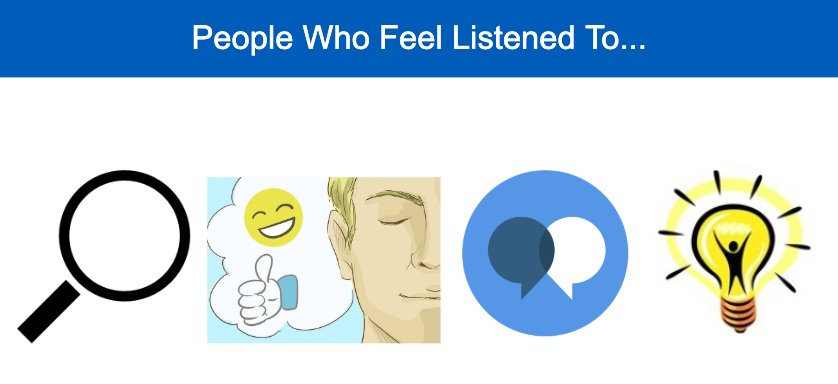
When you are really listening, the other persons tends to discover new things about themselves or new ways of looking at things, the conversation tends to leave them feeling good about themselves, and it should feel like a conversation, as opposed to an interrogation or debate, and it should be at a level where you can challenge assumptions or make suggestions.
People who feel listened to report …
- Questions that Promote Discovery and Insight
- ( 1 ) Questions that Benefit the Speaker
- Help them learn something new
- See things a different way
- Not satisfy your curiosity
- ( 1 ) Questions that Benefit the Speaker
- Interactions to Promote Self-Esteem
- Appreciative Inquiry (good for remote workers)
- Having a Conversation
- Bi-Directional
- Don’t Compete – it’s not a Debate!
- Making Suggestions
- Challenge Assumptions [ trust – safe ]
- Alternatives to Consider
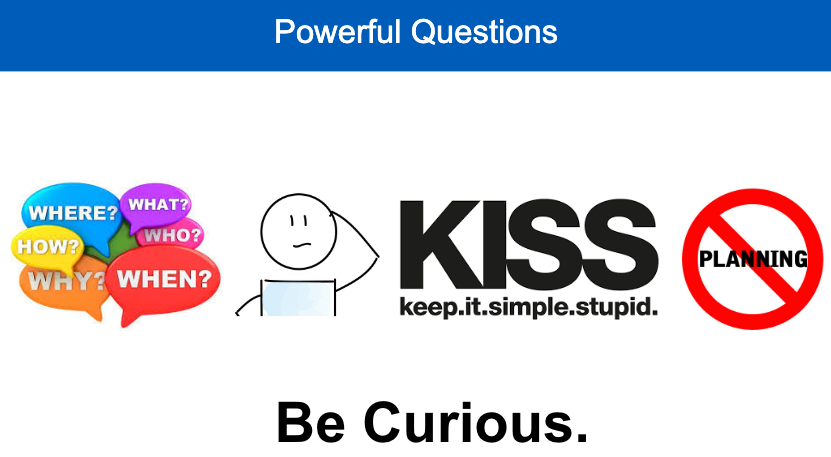
Powerful Questions are …
- Open-ended
- Not assuming a particular answer
- Simple to understand
- Unplanned
A powerful question has the following qualities ….
- Open-ended:
- Ask what, when or how instead of asking a yes or no question.
- EXAMPLE :
- Do you think we could have done better ?
- a closed question, yes/no response, doesn’t really require much thinking.
- However, prefix the same questions with – How …
- How do you think we could have done better ?
- this form forces contemplation – it might be the same result, but it can’t be answered dismissively.
- Do you think we could have done better ?
- Beginner’s Mindset
- Start by telling yourself, “I don’t know the answer”, it will help prevent you displaying any personal biases. For example, replace
- Do you think adding resources to the project slowed it down?
- with
- What do you think contributed to the delays in the project?
- Do you think adding resources to the project slowed it down?
- Start by telling yourself, “I don’t know the answer”, it will help prevent you displaying any personal biases. For example, replace
- Keep It Simple
- Don’t make it difficult for the person to figure out what you are asking.
- What will happen if you did that ?
- How do you think others will react?
- Not every question needs to be a powerful question.
- Don’t make it difficult for the person to figure out what you are asking.
- You Can’t Plan It Don’t be formulaic – Be Curious – there is no script for asking powerful questions
When starting off, one way to help you create powerful questions, is to simply be deeply curious – remember, that you are not trying to elicit information for your own satisfaction, you are trying to ask a question for which the answer will be of benefit to the other person.
… Closing
- Listening. It sounds simple, but can be a challenging technique to master.
- If you are … willing to hear more than just the words being said ?
- If you are … brave enough to let go of control and shine a light on the shadows,
- even if they turn out to be your own ?
- If you are … confident to commit to someone else’s success more than yours?
- so that they … bring their Whole Self to Work
- so that they … have their Best Workday Experience ?
… then you are already in a great place to start.

- If you want to build Trust …
- If you want to make a Connection … …
- Just Listen
Thank You! for Listening 😉
Nice piece, Jim. Well worth it.